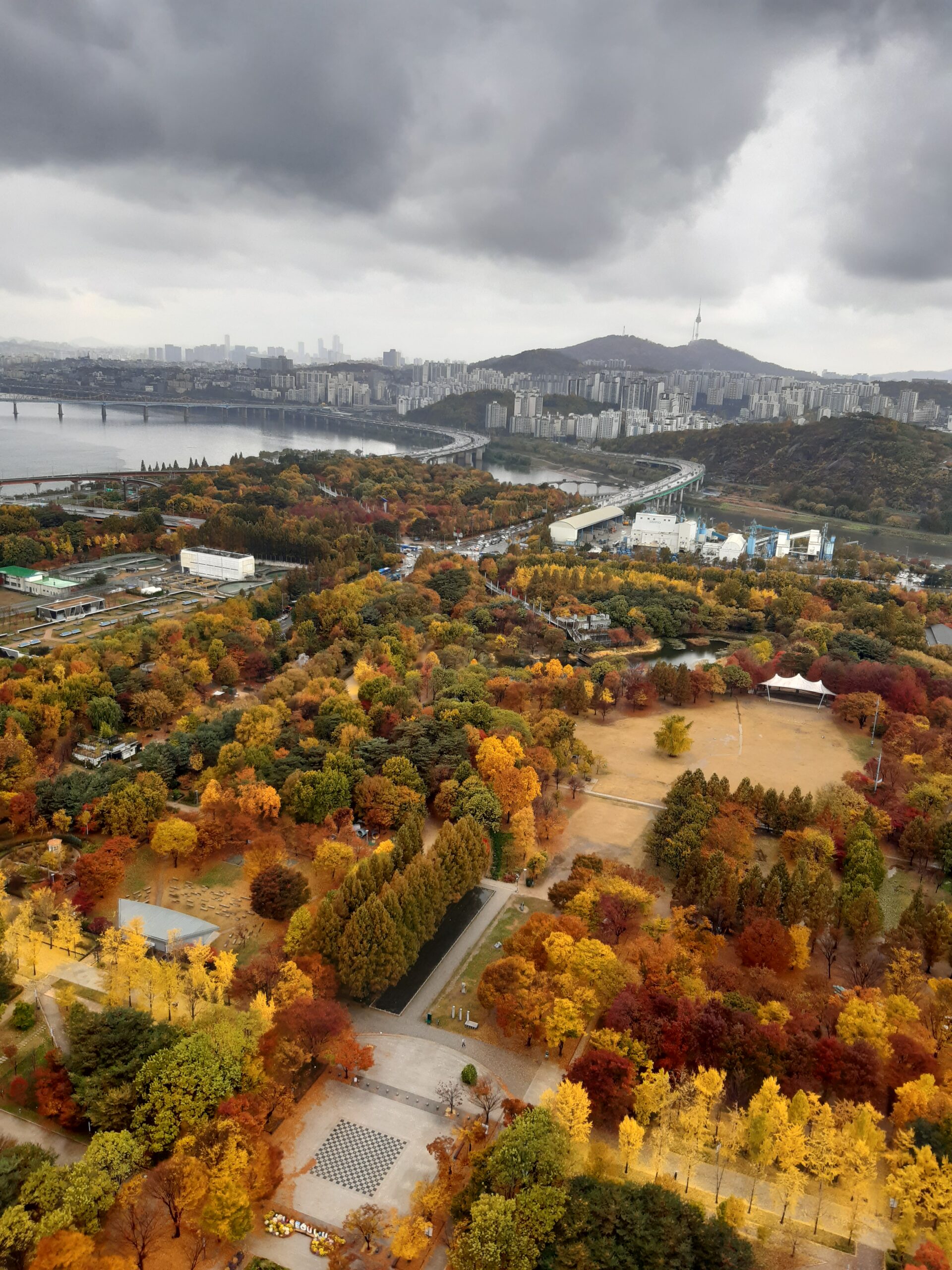
When autumn arrives in South Korea, the atmosphere shifts in a way that feels almost poetic. The scorching summer humidity yields to crisp, cool breezes, the blue skies seem impossibly tall, and tree-lined avenues transform into glowing tunnels of gold and crimson.
In Korean culture, autumn is far more than just a transition between seasons—it is a deeply emotional, reflective, and sensory experience. Naturally, the Korean language has a rich collection of beautiful, evocative words and idioms specifically dedicated to capturing autumn’s unique mood.
If you want to express how you feel during this season like a true native speaker, here are the most expressive autumn Korean words and idioms every learner should know!
1. Expressions for Autumn Moods & Emotions
1) “가을타다” (Gae-ul-ta-da) — Feeling the Autumn Melancholy
- Literal Meaning: “To ride the autumn”
- Nuance: Feeling romantic, sentimental, slightly lonely, or deep in thought as the weather turns cool and the leaves begin to fall.
In Korea, it is widely believed that seasons affect our emotions. While spring is associated with new beginnings and romance (“봄타다”), autumn brings a reflective, nostalgic state of mind. When someone gazes out a window looking unusually quiet or poetic, Koreans will affectionately say they are “riding the autumn.”
How to use it in conversation:
A: “요즘 왜 이렇게 혼자 산책을 자주 해요?”
(Why have you been taking so many walks alone lately?)
B: “날씨가 쌀쌀해지니까 좀 가을타나 봐요.”
(As the weather gets chilly, I guess I’m feeling a bit sentimental/riding the autumn.)
2) “천고마비” (Cheon-go-ma-bi) — High Skies & Abundant Hearts
- Literal Meaning: “The sky is high, and the horses grow fat” (天高馬肥)
- Nuance: Describing the perfect, peaceful, and abundant nature of Korean autumn.
This famous four-character idiom (Saja-성어) dates back centuries. Today, it paints a vivid picture of October in Korea: crisp, cloudless blue skies paired with an abundance of delicious harvested foods like chestnuts, sweet potatoes, fresh apples, and persimmons.
Because the weather is so pleasant, Koreans often link Cheon-go-ma-bi to autumn being the “Season of Reading” (독서의 계절) and the “Season of Appetite” (식욕의 계절)!
How to use it in writing or formal speech:
“천고마비의 계절답게 요즘 하늘도 높고 음식도 너무 맛있어요.”
(True to the ‘season of high skies and fat horses,’ the sky is high and the food is so delicious these days.)
2. Sensory Words for Autumn Nature & Weather
3) “단풍” (Dan-pung) & “낙엽” (Na-gyeop)
- 단풍 (Dan-pung): The changing colors of autumn leaves (reds, yellows, and oranges) on trees.
- 낙엽 (Na-gyeop): Fallen leaves lying on the ground.
While English uses “autumn foliage” or “fall leaves” broadly, Korean distinguishes between the bright leaves still on the branch (단풍) and the dried, crunchy leaves carpeting the pavement (낙엽). Going to see the autumn colors is called 단풍놀이 (Dan-pung-no-ri) or 단풍구경 (Dan-pung-gu-gyeong).
Useful Phrases:
- “단풍이 흐드러지게 피었어요.” (The autumn foliage is in full, breathtaking bloom.)
- “낙엽 바스락거리는 소리가 좋아요.” (I love the sound of crunching fallen leaves underfoot.)
4) “선선하다” (Seon-seon-ha-da) & “서늘하다” (Seo-neul-ha-da)
When describing autumn weather, standard terms like “cool” (시원하다) don’t quite capture the subtle shift in temperature. Korean has fine-tuned adjectives for every degree of cool:
- 선선하다 (Seon-seon-ha-da): Refreshingly crisp and pleasant. Perfect autumn weather where you can wear a light cardigan or knit sweater.
- 서늘하다 (Seo-neul-ha-da): A bit colder with a slight nip in the air, usually during late October evenings or early mornings.
How to use them:
- “바람이 선선해서 산책하기 딱 좋아요.” (The breeze is refreshingly crisp, so it’s perfect for a walk.)
- “아침저녁으로는 제법 서늘해요.” (It gets quite chilly in the mornings and evenings.)
3. Cultural Concepts Tied to Autumn
5) “억새” (Eok-sae) & “갈대” (Gal-dae) — Silver Reeds & Wind
If you visit spots like World Cup Park’s Haneul Park in Seoul or Suncheon Bay in October, you will see vast fields of shimmering silver reeds swaying in the wind.
- 억새 (Eok-sae): Silver grass growing on mountains and open hillsides that glows silver-white under the autumn sun.
- 갈대 (Gal-dae): Reeds growing near wetlands, rivers, and coastal areas.
In Korean literature, swaying reeds represent adaptability, quiet strength, and subtle autumn romanticism.
6) “결실” (Gyeol-sil) — Harvesting Fruits of Labor
- Meaning: Fruitfulness, harvest, or achieving the successful result of long effort.
Historically an agrarian society, autumn in Korea represents the reward after months of hard work during the hot spring and summer months. Culturally, people use 결실 not just for crops, but to describe achieving personal goals, finishing big work projects, or celebrating long-term personal growth toward the end of the year.
How to use it:
“올가을에는 그동안 노력했던 일들이 좋은 결실을 맺기를 바랍니다.”
(I hope all your hard work yields fruitful results this autumn.)
Summary Vocabulary Table
| Korean Word | Pronunciation | English Meaning | Emotional Vibe |
| 가을타다 | Gae-ul-ta-da | Feeling autumn melancholy/sentimental | Nostalgic & Reflective |
| 천고마비 | Cheon-go-ma-bi | High skies & rich harvest season | Bountiful & Peaceful |
| 단풍 / 낙엽 | Dan-pung / Na-gyeop | Autumn foliage / Fallen leaves | Scenic & Beautiful |
| 선선하다 | Seon-seon-ha-da | Refreshingly cool & crisp weather | Pleasant & Comfortable |
| 서늘하다 | Seo-neul-ha-da | Slightly chilly / Chilled air | Cool & Crisp |
| 결실 | Gyeol-sil | Fruitful harvest / Rewarding results | Accomplished & Grateful |
Final Thoughts: Speak the Language of Autumn
Language reflects how a culture perceives the world around it. By using expressions like “가을타나 봐요” when taking a walk under golden ginkgo trees or describing the breeze as “선선하다,” you connect with Korean culture on a much deeper, more authentic level.
Next time you step outside into the October air, try using one of these poetic words with your friends!
🔗 Next Article
---

### 📚 Explore More Real Korean Language & Cultural Guides!

* 🍁 **Part 1 (Seoul Life):** [Top 3 Autumn Foliage & Picnic Parks in Seoul to Visit This October](https://seoulsays.com/best-autumn-foliage-and-picnic-parks-in-seoul)
* 📖 **Part 2 (Seoul Life):** [Read in Seoul Plaza: Free Autumn Outdoor Library at City Hall](https://seoulsays.com/read-in-seoul-plaza-free-autumn-outdoor-library)
* 🇰🇷 **Part 3 (Real Korean):** [Happy Hangul Day! Celebrating the World's Most Scientific Alphabet](https://seoulsays.com/happy-hangul-day-korean-alphabet-guide)
---
답글 남기기