If you visit South Korea during the crisp autumn months, you will notice a vibrant phenomenon: subway trains on weekend mornings filled with people fully geared up in colorful, high-tech hiking apparel.
In Korea, mountain climbing is far more than just a workout—it is a national pastime known as Deung-san (등산).
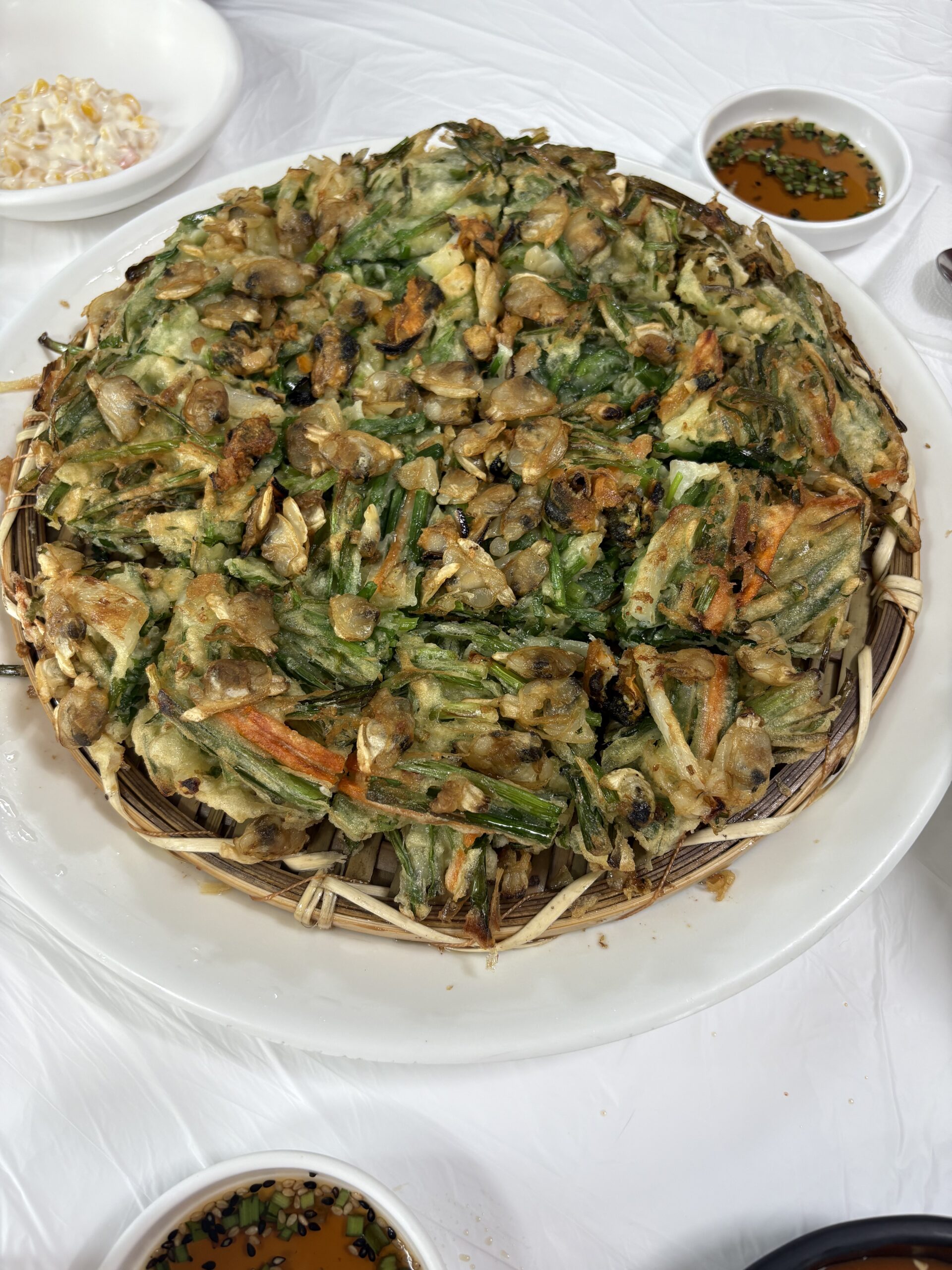
Surrounded by mountains over 70% of its landmass, Korea has developed a distinct outdoor culture that combines scenic nature, high-tech fashion, active social bonding, and, most importantly, an unmissable culinary tradition at the base of the peak: Makgeolli (막걸리) and Pajeon (파전).
In this guide, we will break down what makes Korean Deung-san culture so special, essential vocabulary to know before hitting the trails, and how to enjoy the ultimate post-hike feast like a local!
1. What Makes Korean ‘Deung-san’ Unique?
While hiking in many Western countries often emphasizes solitary wilderness exploration or overnight camping, Korean Deung-san is defined by convenience, community, and holistic enjoyment.
🎒 1) World-Class Trail Accessibility
Because Seoul and major Korean cities are nestled right beside mountain ranges, you can ride the subway directly to a trailhead! Mountains like Bukhansan, Gwanaksan, and Ansan are just a short train ride away, allowing city dwellers to swap skyscrapers for summit views in under an hour.
🧢 2) Next-Level Hiking Fashion (“Gorpcore”)
Koreans take their outdoor gear seriously. From lightweight trekking poles and trail running shoes to sleek windbreakers and sun-blocking visors, standard hiking apparel in Korea looks like a runway show for functional fashion. Even on short 1-hour walks, wearing full hiking gear is part of the immersive experience.
🍎 3) Summit Snacks & Trail Hospitality
Reaching the summit (Jeong-sang) isn’t just about taking pictures—it’s about refuel time! Hikers routinely pack insulated bags loaded with sliced cucumbers (for hydration), cherry tomatoes, Kimbap, and hot thermos water to brew cup noodles (Ramyeon) at the top. It is also common for strangers on the trail to share fruits or snacks with fellow hikers.
2. The Golden Rule of Deung-san: ‘Dwit-puri’ (뒷풀이)
If you ask any native Korean hiker about the best part of Deung-san, nine out of ten will give you the same answer: “The food waiting at the bottom!”
This post-hike social feast is called Dwit-puri (뒷풀이), meaning an after-party or wrap-up gathering.
Nestled at the entrance of almost every major mountain trailhead in Korea, you will find bustling rows of traditional restaurants serving hot, savory dishes paired with ice-cold local drinks.
🥞 The Ultimate Post-Hike Menu:
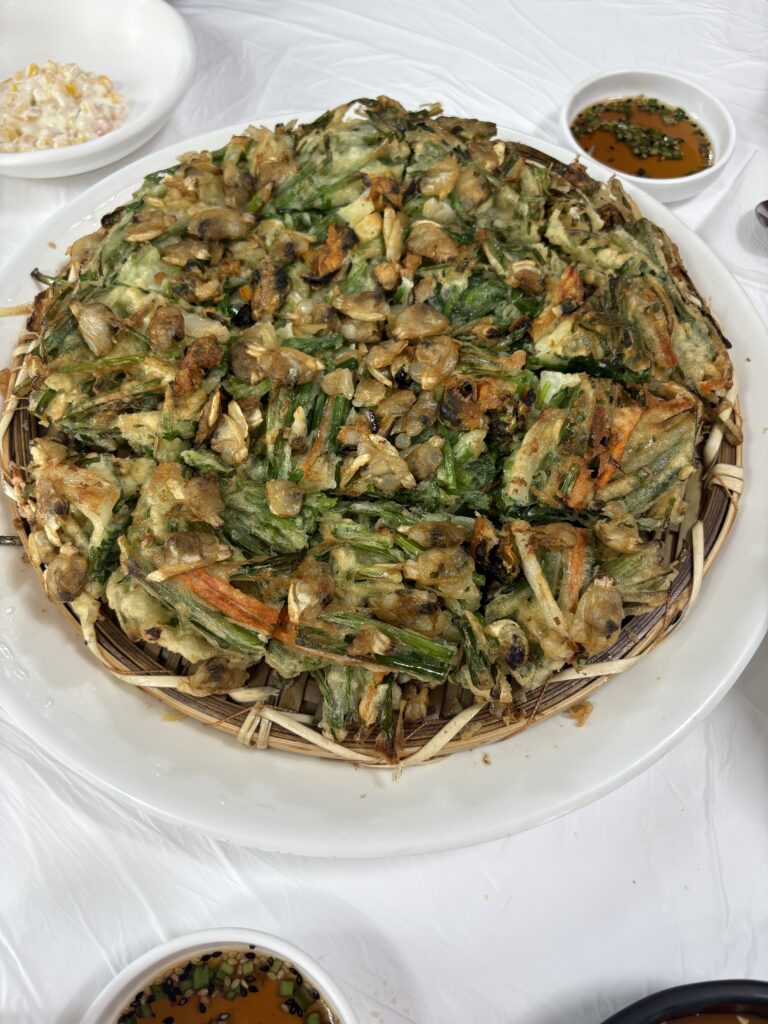
- Pajeon (파전): A thick, crispy Korean green onion pancake. Variations like Haemul Pajeon (해물파전 – Seafood Green Onion Pancake) are loaded with squid and shrimp, pan-fried to golden perfection.
- Makgeolli (막걸리): Korea’s iconic fermented rice wine. Naturally sparkling, slightly sweet, and served ice-cold in traditional brass bowls, it is the ultimate refreshing drink after a sweaty climb.
- Dotorimuk-muchim (도토리묵무침): Seasoned acorn jelly tossed with fresh vegetables, sesame oil, and spicy chili powder—a light, refreshing mountain classic.
3. Essential Korean Vocabulary for Hikers
To help you navigate the trails and join the conversation, here are the most useful Deung-san expressions:
1) 등산 (Deung-san) / 야간 등산 (Ya-gan Deung-san)
- Meaning: Mountain hiking / Night hiking.
- Example:“이번 주말에 친구들이랑 등산 가기로 했어요.”(I-beon ju-mal-e chin-gu-deul-i-rang deung-san ga-gi-ro haet-seo-yo.)Translation: “I decided to go hiking with my friends this weekend.”
2) 정상 (Jeong-sang)
- Meaning: Mountain peak or summit.
- Example:“드디어 정상에 도착했다! 뷰가 진짜 대박이다.”(Deu-di-eo jeong-sang-e do-chak-haet-da! View-ga jin-jja dae-bak-i-da.)Translation: “We finally reached the summit! The view is absolutely insane.”
3) 안산하세요! (An-san-ha-se-yo!)
- Meaning: “Have a safe hike!”
- Context: A friendly greeting exchanged between hikers passing each other on steep or narrow mountain paths. (Short for An-jeon-han Deung-san).
4) 하산 (Ha-san)
- Meaning: Descending or climbing down the mountain.
- Example:“빨리 하산해서 파전에 막걸리 먹자!”(Ppal-li ha-san-hae-seo pa-jeon-e makgeolli meok-ja!)Translation: “Let’s head down quickly and eat pajeon with makgeolli!”
4. Etiquette Tips for Foreign Hikers in Korea
- Keep Right on Trails: When pathways narrow, yield to those climbing up.
- Leave No Trace: Carry all your trash back down with you; Korean trails are remarkably clean!
- Pajeon is Shared: Dwit-puri dishes are meant to be placed in the center of the table and shared family-style among hiking buddies.
Summary: Pack Your Shoes and Hit the Peak!
Autumn is widely considered the absolute best season for Deung-san in Korea thanks to cool breezes, clear skies, and vibrant red foliage.
So grab your sneakers, hop on the subway, conquer a peak, and reward yourself with a warm plate of Pajeon and a bowl of Makgeolli!
📚 Explore More Seoul Hiking & Local Travel Guides!
Plan your next outdoor adventure in Seoul with our comprehensive hiking series:
- ⛰️ Part 1 (Outdoor Culture): Deung-san Guide: Korea’s Unique Hiking Culture, Gear, & Makgeolli After-Party
- 🧗 Part 2 (Best Seoul Trails): Hiking in Seoul: Bukhansan, Achasan, and the Trendy Gwanaksan Trails
- 🏔️ Part 3 (Bucket List Peaks): Top 3 Sacred Mountains of South Korea Every Hiker Must Visit
답글 남기기