When the sweltering heat and heavy humidity of July and August hit the peninsula, the entire culinary landscape of South Korea shifts. While staple dishes like steaming Kimchi Jjigae or sizzling Korean BBQ are beloved year-round, hot summer days call for a completely different tactical menu.
For Koreans, food isn’t just about satisfying hunger—it is a form of seasonal medicine.
Whether you are looking to shock your system cold with ice-filled broths or supercharge your stamina to fight off the draining humidity, Seoul has a dish for every summer mood. If you want to eat like a true local this season, step away from the standard tourist menus and dive into these essential Korean summer delicacies.
1. The Ice-Cold Refreshers: Beating Heat with Ice
When the outdoor temperature hits $33^\circ\text{C}$ ($91^\circ\text{F}$), your first instinct will be to seek out something freezing cold. Korea has mastered the art of savory, ice-chilled main courses.
🥢 Naengmyeon (냉면) – Cold Buckwheat Noodles
Originally a winter delicacy from Northern Korea, Naengmyeon has evolved into the absolute king of South Korean summer dining. It consists of thin, chewy buckwheat noodles served in two distinct styles:
- Mul-Naengmyeon (물냉면): Noodles submerged in a tangy, partially frozen beef and dongchimi (water kimchi) broth, often topped with crunchy cucumbers, Korean pear slices, and a hard-boiled egg. Locals often add a splash of vinegar and yellow mustard for an extra kick.
- Bibim-Naengmyeon (비빔냉면): For spice lovers. The noodles are served without broth, generously coated in a sweet, savory, and spicy red pepper paste (Gochujang) sauce.
🥢 Kongguksu (콩국수) – Cold Soy Milk Noodles
If you are looking for a vegan-friendly, deeply soothing, and savory hidden gem, Kongguksu is your answer. This seasonal dish features wheat noodles resting in a thick, creamy, and completely cold broth made from freshly ground soybeans. It is incredibly rich in protein and typically seasoned with just a pinch of salt or sugar (a friendly debate that divides Korean foodies!). It tastes like a refreshing, nutty hug on a humid afternoon.
2. The Stamina Boosters: Fighting Fire with Fire
While cold noodles are intuitive, Korea possesses a unique, ancient cultural philosophy called 이열치열 (Iyeol-chi-yeol), which translates to “Fighting fire with fire.” Locals believe that eating hot, nutrient-dense foods causes you to sweat, which naturally regulates your internal body temperature and restores the vital energy lost to the summer heat.
The Philosophy of 'Iyeol-chi-yeol':
[Extreme Outdoor Heat] ➔ [Eat Nutrient-Dense Hot Food] ➔ [Healthy Sweat & Detox] ➔ [Restored Stamina]
🍲 Samgyetang (삼계탕) – Ginseng Chicken Soup
The ultimate champion of Iyeol-chi-yeol is Samgyetang. A whole, tender young chicken is stuffed with sweet sticky rice, ginseng, garlic, jujubes (Korean dates), and ginger, then boiled to perfection in a rich, comforting broth. It is served boiling hot in an earthen pot. It is the definitive energy booster that keeps the country running during the hottest months.
🥩 Samgyeopsal (삼겹살) – Sizzling Pork Belly for Vitality
You might be surprised to see heavy Korean BBQ on a summer list, but busy salarymen in Seoul regularly flock to exhaust-fan-lined restaurants after work to eat Samgyeopsal. Pork is rich in Vitamin B and high-quality protein, making it a go-to choice for replenishing nutrients after a long day of sweating in the city. Paired with fresh lettuce wraps (Ssam) and a cold drink, it is a glorious way to recover your energy.
3. The Ultimate Sweet Finale: Korea’s Dessert Royalty
No summer food tour in Seoul is complete without addressing the sweet tooth. Korea’s dessert game is arguably one of the most creative in the world, and summer belongs entirely to one dish.
🍧 Patbingsu (팥빙수) – Traditional Shaved Ice
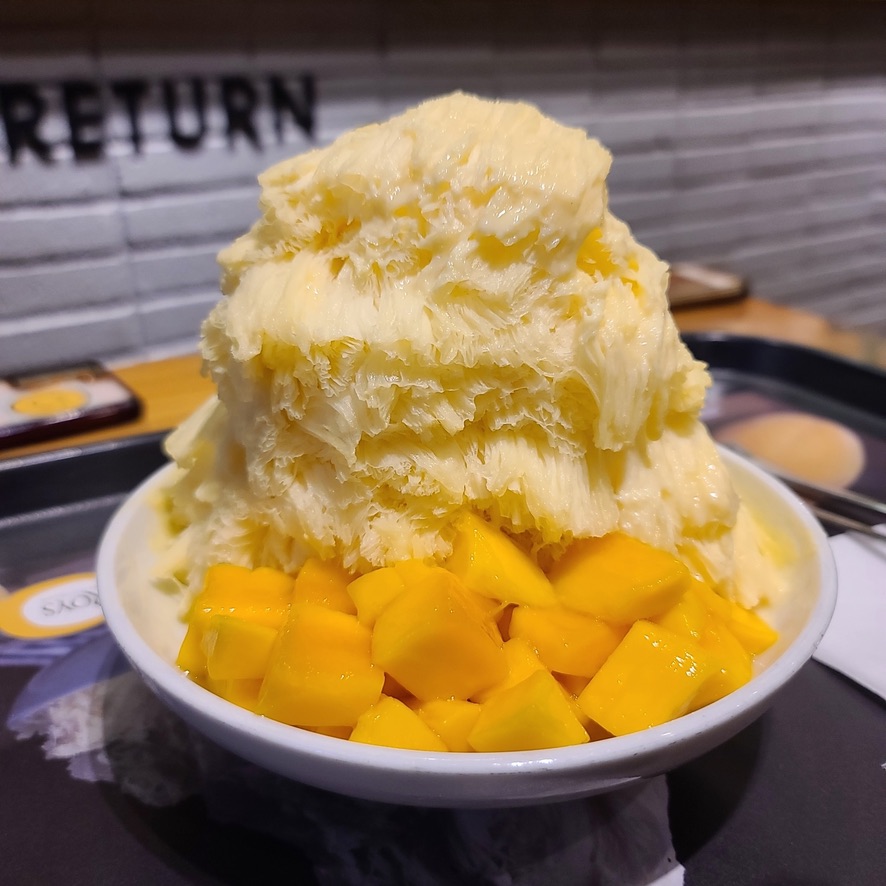
Forget the chunky, snow-cone ice you might be used to back home. Authentic Korean Bingsu features milk blocks shaved down to an impossibly fine, fluffy texture that mimics fresh winter snow.
The traditional variety, Patbingsu, is topped with sweet, slow-cooked red beans, chewy tteok (rice cakes), and a dusting of roasted grain powder (Misutgaru). If you prefer fruits, modern cafe chains across Hongdae and Gangnam serve giant bowls loaded with fresh mangoes, strawberries, or matcha ice cream. It is the ultimate social dessert designed to be shared with friends.
Quick Guide: What to Crave Today?
To help you decide what to eat during your next culinary exploration in Seoul, save this quick reference guide:
| If You Are Feeling… | The Best Choice | Flavor Profile | Perfect Spot to Try |
| Overheated & Sticky | 물냉면 (Mul-Naengmyeon) | Tangy, savory, refreshing, icy | Traditional markets or specialized noodle shops |
| Exhausted & Low Energy | 삼계탕 (Samgyetang) | Deep, herbal, comforting, boiling hot | Dedicated historic Samgyetang restaurants |
| Hungry & Craving Comfort | 콩국수 (Kongguksu) | Creamy, nutty, velvety, savory | Local neighborhood kalguksu spots |
| In Need of a Sweet Treat | 팥빙수 (Patbingsu) | Sweet, snowy, fluffy, refreshing | Aesthetic cafes or specialized dessert shops |
Summary: Elevate Your Taste Buds This Summer
Embracing the local cuisine is the single fastest way to transform your journey in South Korea from a simple holiday into an authentic lifestyle experience. Don’t be afraid of the boiling hot soups or the ice cubes floating in your savory noodles—trust the centuries of local wisdom that built these incredible traditions.
🔍 Next Up: Deep Dive into Korea’s Most Unique Summer Tradition
Among all these delicious choices, there is one particular dish that has three specific, designated days on the Korean calendar where the entire nation lines up for hours just to eat it.
Why are millions of people obsessed with Samgyetang during the official “dog days” of summer? What on earth does the term ‘Boknal’ (복날) mean?
Join the Conversation!
Which of these dishes sounds like your ultimate summer craving? Are you team Cold Noodles or team Boiling Hot Soup? Let us know in the comments below!
다음에 봐요! (See you next time!)
답글 남기기